Isaac Horton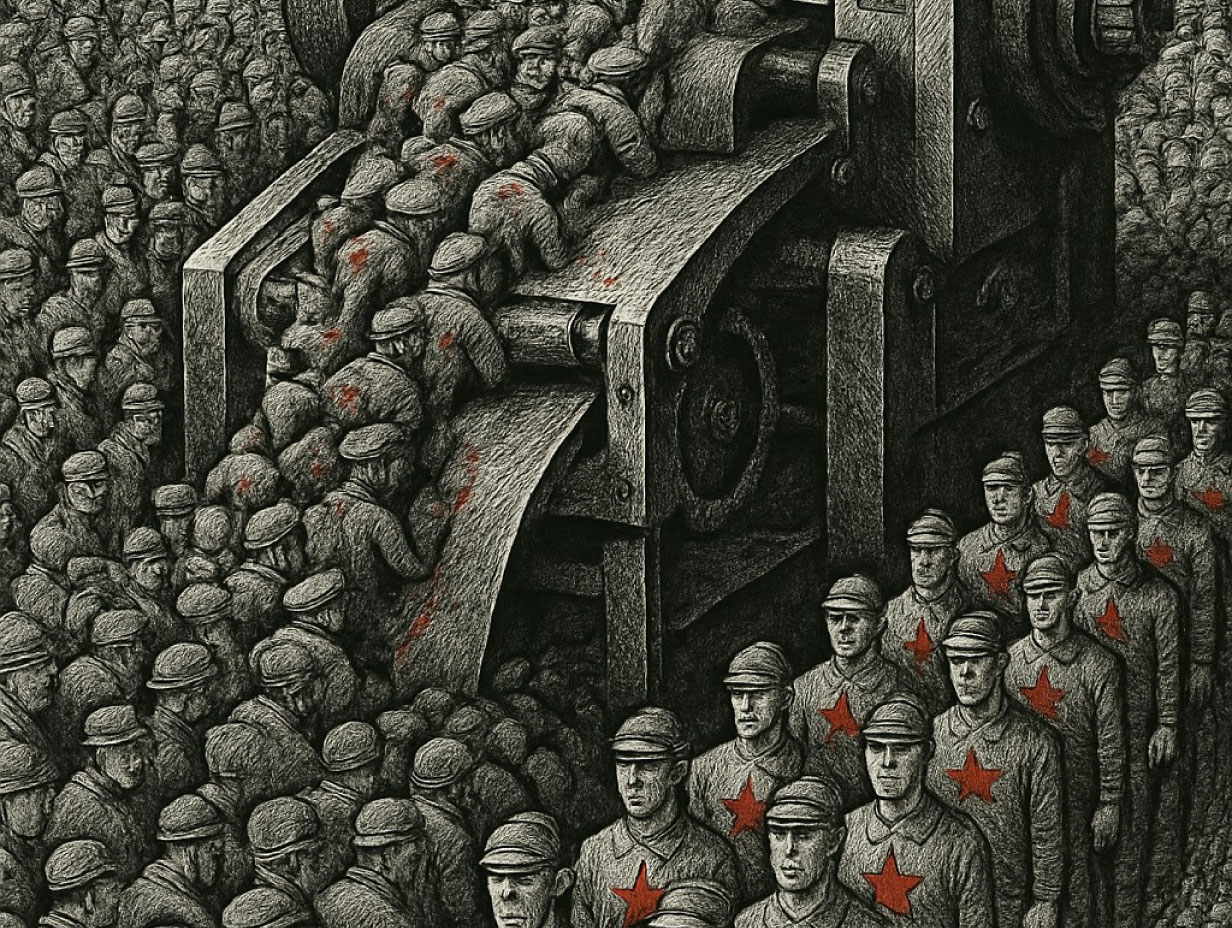
Rethinking the Modern School System
The modern school system did not emerge from a study of human flourishing. It emerged from an industrial paradigm designed for predictability, obedience, and scale. Much of the educational architecture still used today can be traced back to the Prussian model of the nineteenth century, a system explicitly engineered to produce disciplined soldiers and compliant workers. Its design succeeded in maintaining industrial economies and strengthening the state, but it did so by shaping human minds in ways that limit autonomy, creativity, and authentic intelligence.
If we look closely at the crises unfolding across civilization today, it becomes clear that many of them begin upstream in the assumptions embedded within our educational models. We inherited a system optimized for a world that no longer exists. Continuing to reproduce it trains young minds for a civilization already failing. What is needed is not minor reform but a transformation of how we understand knowledge, learning, intelligence, and the human being itself.
The Industrial Origins of Modern Education
The Prussian system was built on a clear logic: central authority must shape citizens who will reliably serve the state. Rote memorization, hierarchical structure, standardized progression, and early-age indoctrination were not defects in the system. They were its purpose. The model taught students to follow orders, suppress dissent, and conform to external authority. This was essential for maintaining industrial machinery and prosecuting organized warfare.
Today the architecture remains largely unchanged. Students advance at the pace of a conveyor belt, not at the pace of their curiosity. They are evaluated not on insight or coherence but on the ability to recall information long enough to pass a test. The institution rewards compliance over inquiry, speed over depth, and standardization over uniqueness.
The results are predictable. Children learn to fear failure rather than explore possibility. They become dependent on external authority rather than developing internal discernment. Creativity becomes a risk. Divergence becomes a liability. The subtle message absorbed during the most formative years is that the world is something to fit into, not something to understand or transform.
Education as Ecosystem Rather Than Factory
A regenerative approach to education begins by discarding the industrial metaphor entirely. Learning is not a factory process. It is an ecosystem. Each mind is a unique expression of universal intelligence, shaped by distinct patterns of curiosity, rhythm, temperament, and purpose. Treating this diversity as noise rather than signal suppresses the very capacities that a civilization needs in order to evolve.
A healthier model would focus not on controlling emergence but on designing for it. Children would learn how to think, not what to think. They would be guided to question, integrate, and reflect. Knowledge would arise through direct experience, cross-disciplinary collaboration, and long-term projects that develop real-world capability rather than short-term test performance.
This kind of education cultivates wisdom rather than mere knowledge. Wisdom involves context, pattern recognition, and the ability to apply understanding toward the wellbeing of the whole. A society built on wisdom produces not obedient citizens or hyper-specialized competitors, but creative stewards capable of sensing emerging patterns and responding with coherence.
The Rigidity of Academia and the Capture of Inquiry
Academia, as it stands, often functions as a structure that rewards authority over curiosity. Scientific institutions have become deeply intertwined with political and corporate interests. Funding shapes research agendas. Consensus becomes a product rather than an outcome of inquiry. Paradigms persist not because they are true but because reputations and careers depend on their preservation.
The scientific method itself remains sound, but the systems surrounding it can be weaponized to create narrative conformity. Studies can be framed to validate existing assumptions. Data can be filtered to support profitable conclusions. Dissenters can be marginalized through prestige economies that reward alignment with institutional power.
When science becomes an instrument of authority rather than a practice of discovery, it loses its evolutionary power. It becomes a theology of certainty. It becomes a mechanism of control rather than a method of inquiry.
Restoring the Evolutionary Function of Science
True science is inherently revolutionary. It is the willingness to revise or abandon cherished ideas when deeper understanding emerges. It requires transparency, humility, and the recognition that reality is always more complex than any model of it. For science to serve civilization well, it must operate within systems that reward honesty over authority and collaboration over control.
Democratizing the stewardship of knowledge is essential. When data, methodology, and discourse are open rather than gated, science becomes a collective intelligence system. When inquiry is not restricted by funding agendas or political pressures, discovery becomes possible again. When error can be admitted without professional destruction, learning accelerates.
If such a transformation takes hold, the structure of knowing itself begins to change. Learning becomes participatory. Knowledge becomes emergent. Epistemology becomes a living practice rather than an academic abstraction.
A Civilization Capable of Learning
Imagine an educational system where every learner is both student and teacher. Where curiosity drives inquiry. Where knowledge reorganizes itself in response to new understanding. Where the purpose of education is not to reproduce the limitations of history but to transcend them.
Such a system creates a civilization capable of learning at planetary scale. Instead of reinforcing outdated models, it continuously redesigns itself in service of life. It produces humans who are conscious, creative, and aligned with the evolutionary potential of existence. They are not conditioned to fit into the world as it is, but prepared to help shape the world as it could be.
This is not utopian. It is necessary. The existential challenges facing humanity cannot be solved by minds trained for obedience or specialization alone. They require integrative thinkers capable of holding multiple perspectives, sensing long-term consequences, and collaborating across divides.
Conclusion
The current school system is an artifact of an industrial age that is rapidly becoming obsolete. Continuing to reproduce it will only accelerate the fragmentation and dysfunction already visible across society. But a regenerative, ecosystemic model of education can help humanity transition into a more coherent future.
Education is not about producing citizens for the state or workers for the economy. It is about cultivating humans capable of participating in the evolutionary process of civilization. When knowledge is liberated from hierarchy and learning becomes a shared practice of discovery, humanity gains the ability to evolve together.
The future of education is the future of civilization itself. What we choose to teach, and how we choose to teach it, will determine whether we repeat the patterns of our past or transcend them. The choice is still ours.
 The Looming Financial Apocalypse: America’s Debt Crisis and the Coming Global Reset